
The Part of the Conversation That Actually Sticks
You can spend ten minutes delivering the cleanest elevator pitch of your life. Clear. Confident. Specific. And by Thursday, the person you gave it to will remember maybe one detail from it.
But they will remember exactly how you handed over your contact info.
That part lodges itself somewhere. The fumble. The smooth tap. The apology while you searched your pockets. The moment you asked them to open their notes app. It all registers in a way that the words usually don't.
There is a reason for that.
Memory Prefers Moments Over Content
Human memory is not great at retaining information delivered in conversation. It fades fast, especially in loud rooms, especially when someone has already talked to eleven other people that day.
What memory is actually good at is capturing the texture of an experience. How something felt. Whether it was easy or awkward. Whether a person seemed ready or seemed like they were improvising.
The moment you exchange contact info is one of the few concrete, physical things that happens in a networking conversation. Everything else is abstract. That moment is not. There is an action. There is a result. And the brain files it.
The Fumble Has a Long Half-Life
If you dug through your coat and produced a bent card, they remember that.
If you asked them to read out their email address while you typed it in, they remember the pause where you made a typo and had to start over.
If you said you would just text them and then had to ask for their number first and then couldn't get a signal and said you would find them on LinkedIn, they remember all of that.
None of it is catastrophic. People are forgiving. But it adds up to an impression that lives just under the surface when your name comes up later.
The Smooth Version Also Has a Long Half-Life
This is the part that most people miss.
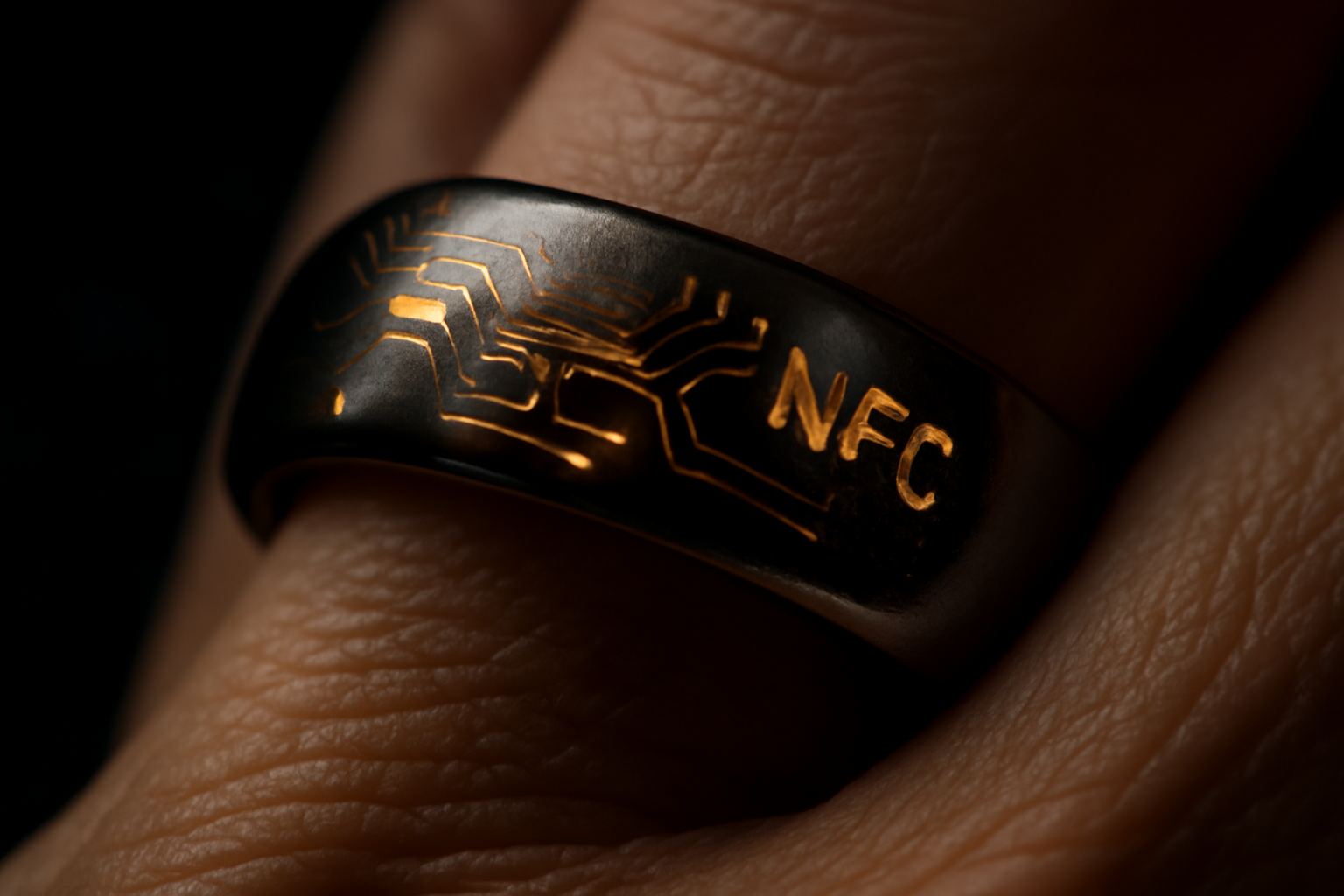
The version where you just tap your ring to their phone and your contact card appears instantly, no app, no friction, no asking them to do anything except tap save, that version sticks too.
People are not used to it. They comment on it. They ask about it. Sometimes they show the person next to them. You become the person who had the ring thing. And that is attached to your name in a way that no amount of clever wordplay in a pitch will achieve.
It sounds small. It is not small. Being memorable for the right reason is one of the hardest things to manufacture in a room full of people trying to stand out.
The Contact Info Moment Is a First Impression Within a First Impression
You probably think of the first impression as the greeting. The handshake, the name, the opening line. And yes, that matters.
But the contact info moment is a second first impression that most people completely ignore. It is the last thing they experience before you part ways. It is what closes the loop on who you are.
End that moment cleanly and the whole conversation lands better in their memory.
End it with friction and the friction becomes the thing they associate with you.
You Do Not Get a Lot of Chances to Control How You Are Remembered
Most of what determines whether someone thinks well of you after an event is outside your control. How their day went. Who else they talked to. Whether they were tired.
The contact exchange is one of the few variables you actually own.
TapRing costs $45. A single connection that goes somewhere because you were the smooth one in the room pays for itself faster than you would expect.
The words you said will fade. The moment you handed over your info will not. Make it the version worth remembering.