
The Part of Networking Nobody Admits
You prepared. You practiced your intro in the car. You had the right outfit, the right shoes, the right energy walking in.
Then someone important looked directly at you and asked what you do.
And you forgot.
Not all of it. Just enough. The sentence you rehearsed came out wrong. You added a word that didn't belong. You laughed at the wrong moment. By the time you recovered, the conversation had already moved somewhere else.
This is not a confidence problem. This is a human problem. Nerves do something specific to your brain under social pressure. They narrow your focus. They cut off access to things you know perfectly well when you are alone.
The part that matters here is that sharing your contact info is usually the last thing you do in a conversation. Which means it happens after the nerves have been running for a while.
What Usually Goes Wrong at the End
You fumble for a card that isn't there. Or you find one that has your old number. Or you try to type your email into their phone and spell your own name wrong. Or you ask them to text you and then you both just stand there waiting for someone to be the one to do it.
None of this is catastrophic. But it is the last thing they remember.
The final moment of an interaction carries weight. Psychologists call it the recency effect. Whatever happens last sticks. Which means a shaky handoff at the end of an otherwise good conversation can quietly undo some of what you built.
Why a Ring Changes This Specific Problem
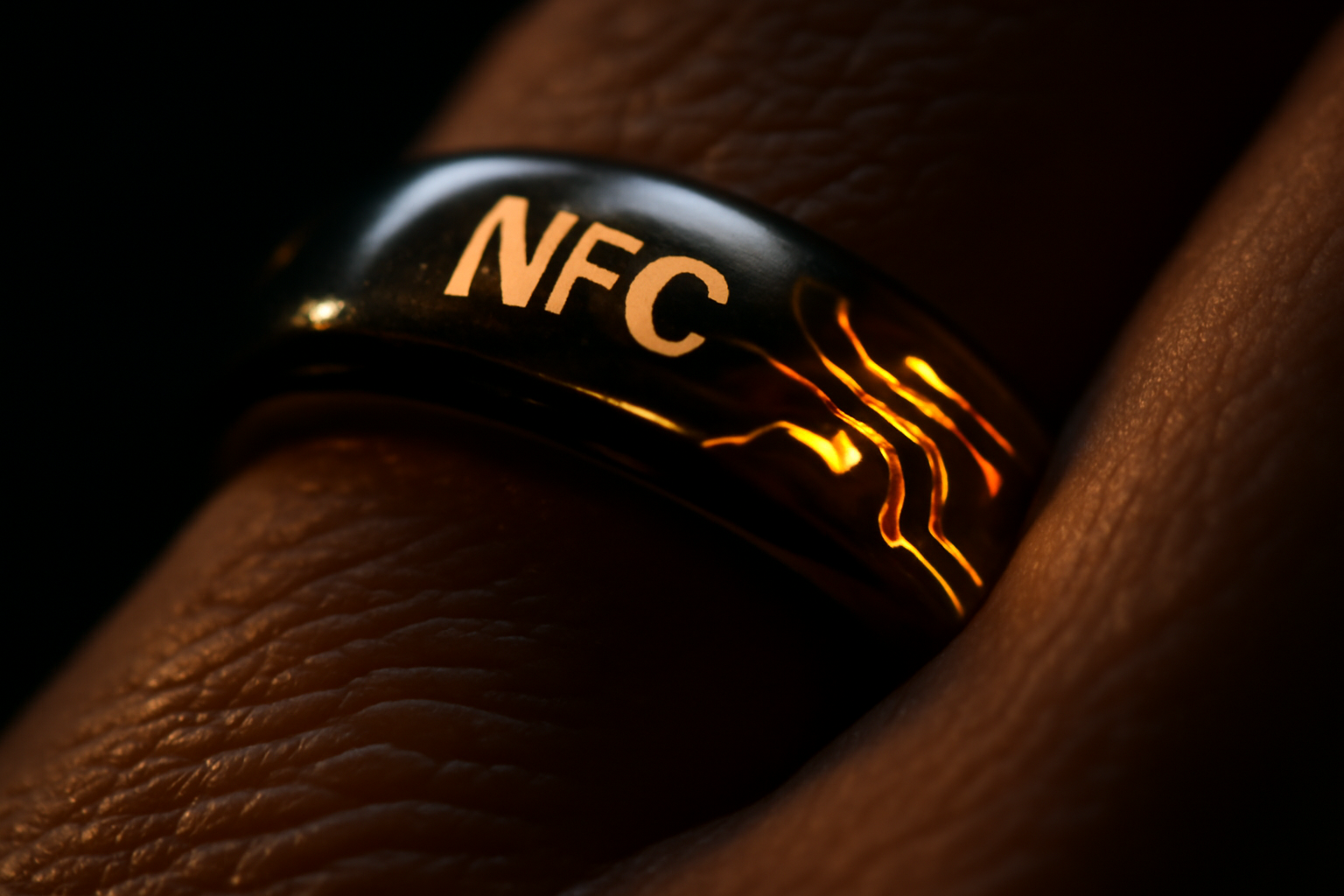
Here is what is interesting about NFC and why it is different from every other contact sharing method when you are nervous.
It does not require you to think.
You do not have to find anything. You do not have to spell anything. You do not have to ask anyone to do anything. You hold your hand near their phone. Their phone opens your contact page. Done.
That is not a small thing when your brain is already running hot.
Every other method requires some combination of searching, typing, waiting, asking, or explaining. TapRing requires none of that. It works in about one second. It does not care that your voice was slightly too fast or your handshake was slightly too firm.
The ring does not get nervous.
The Part Where the Curiosity Gets Interesting
NFC stands for near field communication. It is a radio frequency technology. When you bring the ring close to a phone, it triggers a short-range signal that the phone reads. No app needed on their end. No pairing. No connection request. Just a tap and a page.
The reason this works when you are nervous is not because the technology is calming. It is because it removes a decision. And decisions under pressure are where things fall apart.
The fewer things you have to do at the end of a conversation, the cleaner the exit. And a clean exit, when everything else was a little rough, still leaves a good impression.
What This Actually Looks Like in Practice
You are at an event. You meet someone worth knowing. The conversation goes okay, not perfect, but okay. You are wrapping up.
Instead of reaching into a pocket or asking them to pull up their phone, you just say: here, tap my ring. They do. Your info appears. They save it.
You walk away having done the one part right that most people do wrong.
And because sharing your info was so easy, you do not hesitate. You offer it to more people. You stop waiting for the conversation to feel perfect before you make your move.
That is the actual benefit. Not just that it works when you are nervous. It is that knowing it works makes you less nervous about offering it.
TapRing starts at $45. The ring does not forget what to do even when you do.