
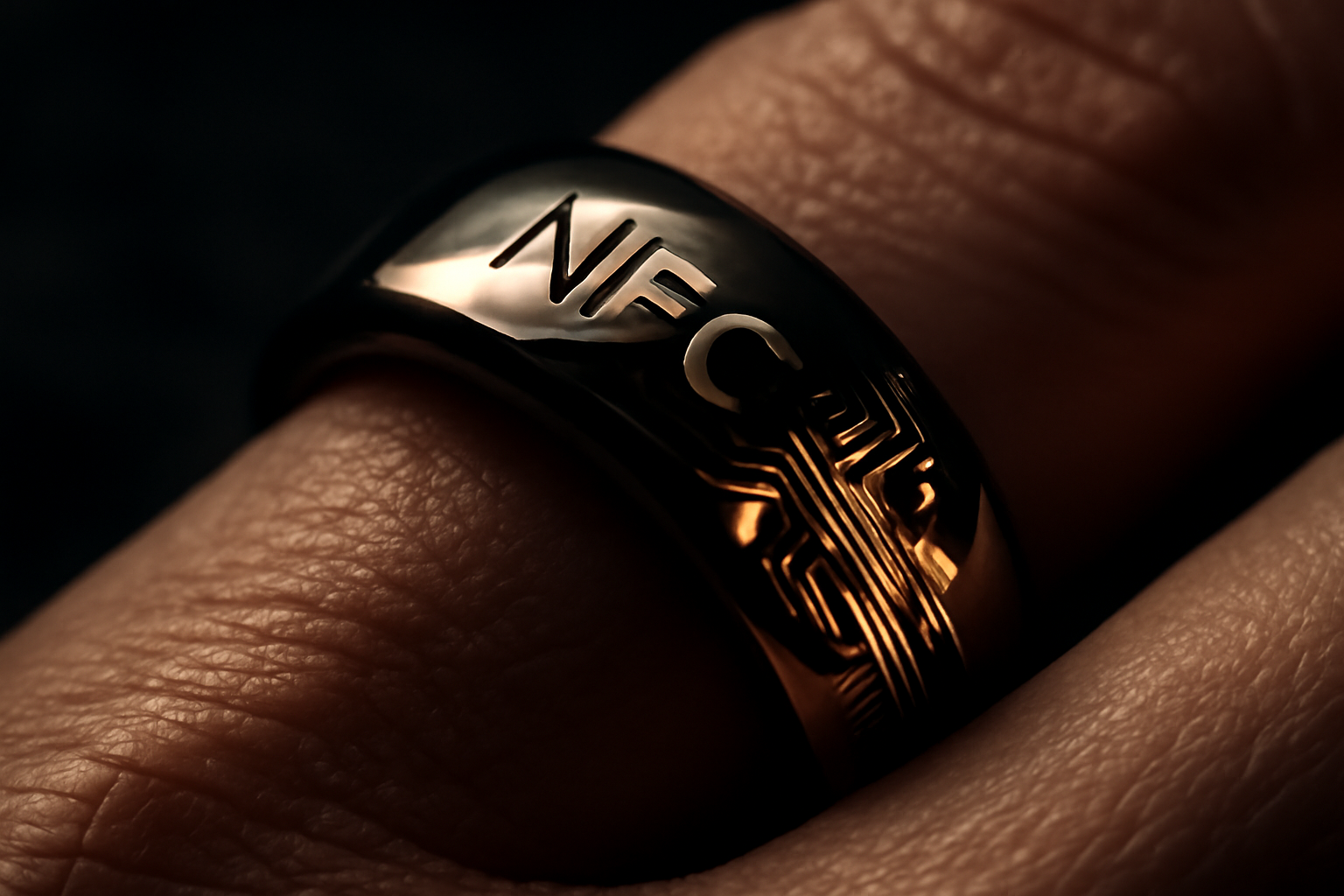
Most people hear "NFC" and immediately think there's a catch.
Like, sure, you tap the ring, but then what? The other person needs to download something, right? They need to be on the same platform. They need to have set something up already.
Nope.
And once you understand why, the whole thing clicks.
What NFC Actually Is
NFC stands for Near Field Communication. It's a short-range wireless protocol that's been built into smartphones for years. Both iPhones and Android devices have it. Not as an add-on. Not as a feature you turn on. It's just there.
Your phone uses NFC every time you tap to pay at a register. That's the same technology. The hardware is already in the device. The operating system already knows what to do with it.
So when someone taps a TapRing against their phone, the phone isn't waiting for an app to catch the signal. The OS handles it directly.
Why No App Is Required on Their Side
Here's the part that surprises people.
The NFC chip in a TapRing doesn't send a file. It sends a URL. A web address. That's it.
When the phone receives that URL through NFC, it opens a browser. The browser loads a page. That page is your digital profile, with your name, your role, your contact details, your links.
The other person's phone doesn't need an app because it's not running an app. It's running a browser. Every smartphone has one. Every smartphone has had one for over a decade.
There's no handshake between two accounts. There's no platform they need to be on. There's no download prompt. Just a tap, and a page opens.
Why This Matters More Than People Realize
Think about how many contact-sharing tools break the moment the other person isn't on the same system.
AirDrop is Apple only. Certain apps need both people to have accounts. Bluetooth sharing is unreliable and slow. Even some NFC card products require the recipient to have a specific app installed to do anything useful with the tap.
TapRing doesn't have that problem. It works on iPhones. It works on Android. It works on older phones. It works on your client's phone, your future boss's phone, the journalist you just met, and the stranger at the alumni event who runs a company you didn't know existed until ten minutes ago.
You don't have to ask what kind of phone they have. You don't have to worry. You just tap.
The Part That Feels Like Magic but Isn't
People who see TapRing in action for the first time often say it feels like a magic trick.
It isn't. It's just that the technology behind it is so built-in and so quiet that most people don't think about it until they see it do something useful.
The chip in the ring is passive. It has no battery. It doesn't broadcast anything. It activates only when it gets close to an NFC reader, which is the antenna in the other person's phone. The phone powers the exchange. The ring just holds the URL and passes it along.
The whole interaction takes less than a second.
What You're Actually Wearing
When you put on a TapRing, you're wearing a tiny piece of infrastructure. One that taps into technology that's already everywhere, on every modern phone, waiting to be used.
The reason most people don't walk around sharing contact info this way is that nobody thought to put the chip somewhere natural. Somewhere you'd always have with you. Somewhere that doesn't require digging through a bag or pulling up an app.
A ring is always on your hand. Your hand is always part of the introduction.
That's the whole idea. No mystery. No magic. Just a very obvious solution that took a while to show up.
TapRing starts at $45. No app needed on either side.