
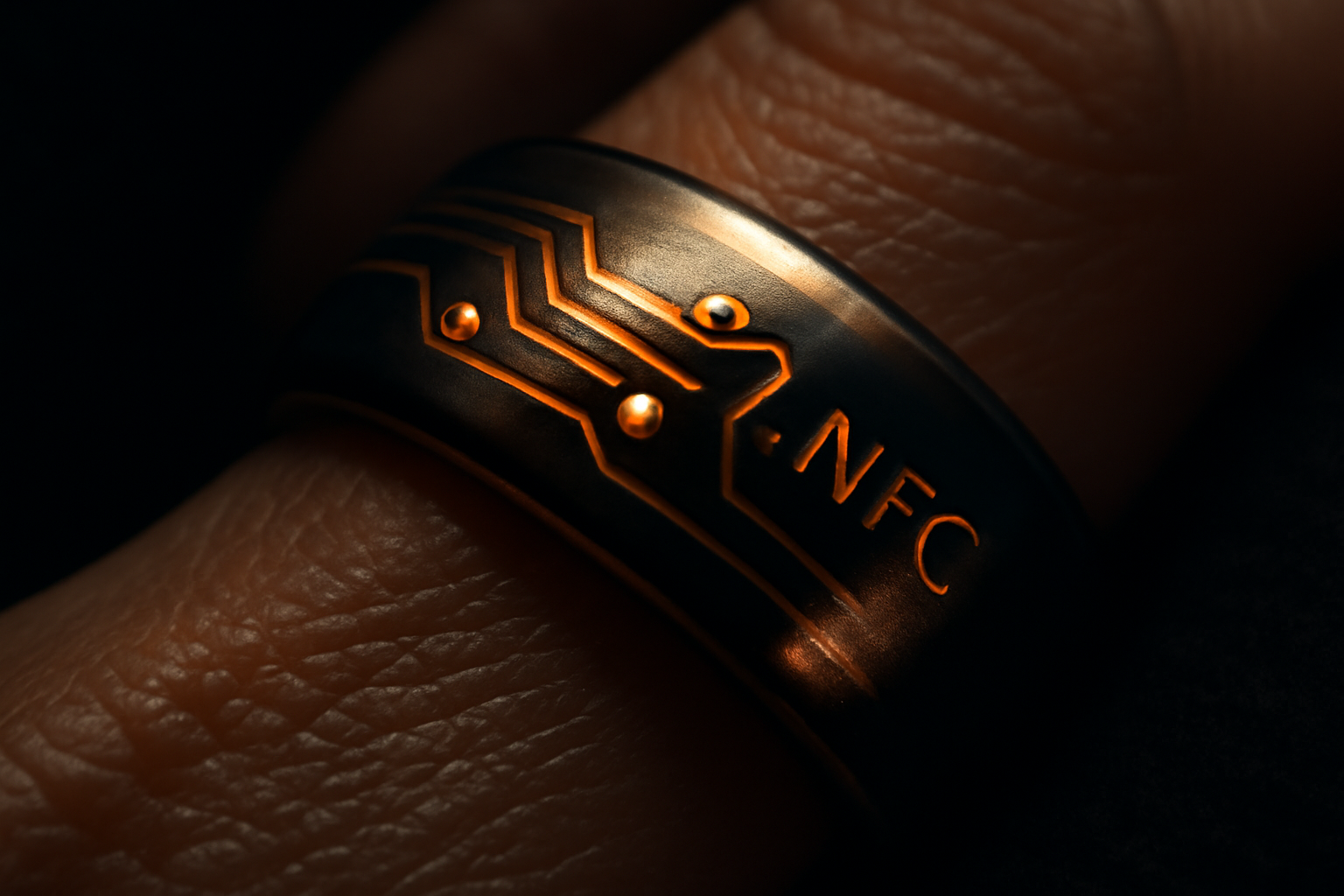
The Worst Networking Spots Have No Signal
You know the ones. The hotel ballroom that somehow has four bars on arrival and zero the moment the event starts. The rooftop venue where everyone's phone drops to one bar the second the sun goes down. The basement conference room where your carrier acts like the building is underwater.
These are exactly the kinds of places where networking happens. And they're exactly the places where most sharing methods fall apart.
AirDrop gets spotty. Your calendar link won't load. The LinkedIn QR code spins forever. You watch someone's phone try to open a URL and fail, and then the moment is gone.
NFC doesn't have this problem. Not even a little.
NFC Is Not the Internet
This is the part most people don't realize. NFC stands for Near Field Communication. It's a radio frequency technology. When you tap a TapRing to someone's phone, what happens has nothing to do with your wifi signal, their data connection, or whether either of you can send a text message.
The ring contains a tiny chip. That chip talks directly to the phone using a radio frequency that operates at 13.56 megahertz. The phone's NFC reader picks it up. The information transfers. The contact opens.
No internet involved. No servers queried. No routing through anything.
The only thing NFC needs is proximity. You and the other phone, close together for a second.
What Actually Has to Go Right
For NFC to work, three things need to be true. The phone needs to have NFC hardware, which almost every smartphone released in the last several years does. NFC needs to be enabled on that phone, which it is by default on most devices. And the ring needs to be within a few centimeters of the phone's NFC reader.
That's it. Signal strength is not on that list. WiFi is not on that list. Whether either phone has a data plan is not on that list.
You can tap someone's phone in an elevator with no service. In a parking garage. On a plane with airplane mode on. The tap works or it doesn't based on hardware and proximity, not connectivity.
Why This Matters More Than People Think
A lot of the best networking moments happen in places with terrible reception. Industry dinners in old buildings. Outdoor markets. Trade floors. Warehouses turned event spaces. The in-between moments in hallways and parking lots where the real conversations happen.
If your method of sharing contact info depends on a connection, you're already betting against yourself in exactly the environments where you need it to work most.
TapRing doesn't bet. It just works.
The Other Side of It
There's a second layer here too. When someone taps your TapRing, their phone opens a web page with your digital card. That part does require a connection, but only on their end, and only for a moment.
If they're in a dead zone, they'll get the prompt and can open it the second they step outside. The tap already happened. The intent is already there. They don't lose your info because they were standing somewhere inconvenient.
Compare that to the scenario where you're trying to text someone your number in a dead zone. Or share a link. Or get their AirDrop to connect. All of those require the moment to cooperate with the infrastructure. NFC doesn't.
The Thing Worth Knowing
When you wear a TapRing, the one variable you've taken off the table is connectivity. That's not a small thing. That's the variable that kills the most networking moments in the most important rooms.
The conference center with 3,000 people hammering the wifi. The courtyard event where nobody has signal. The parking garage goodbye where you realize you never exchanged anything.
Your ring works there. It was always going to work there. That's the whole point.