
Nobody Explains This Part
You tap your ring to someone's phone. Their screen lights up. A link appears. They tap it and your contact info is right there.
No app. No Bluetooth. No Wi-Fi. No QR code to line up.
People assume there's a trick. There isn't. There's just physics and a standard that every modern phone already supports.
What Is Actually Happening
NFC stands for Near Field Communication. It is a form of radio communication that works at very short range, usually a few centimeters.
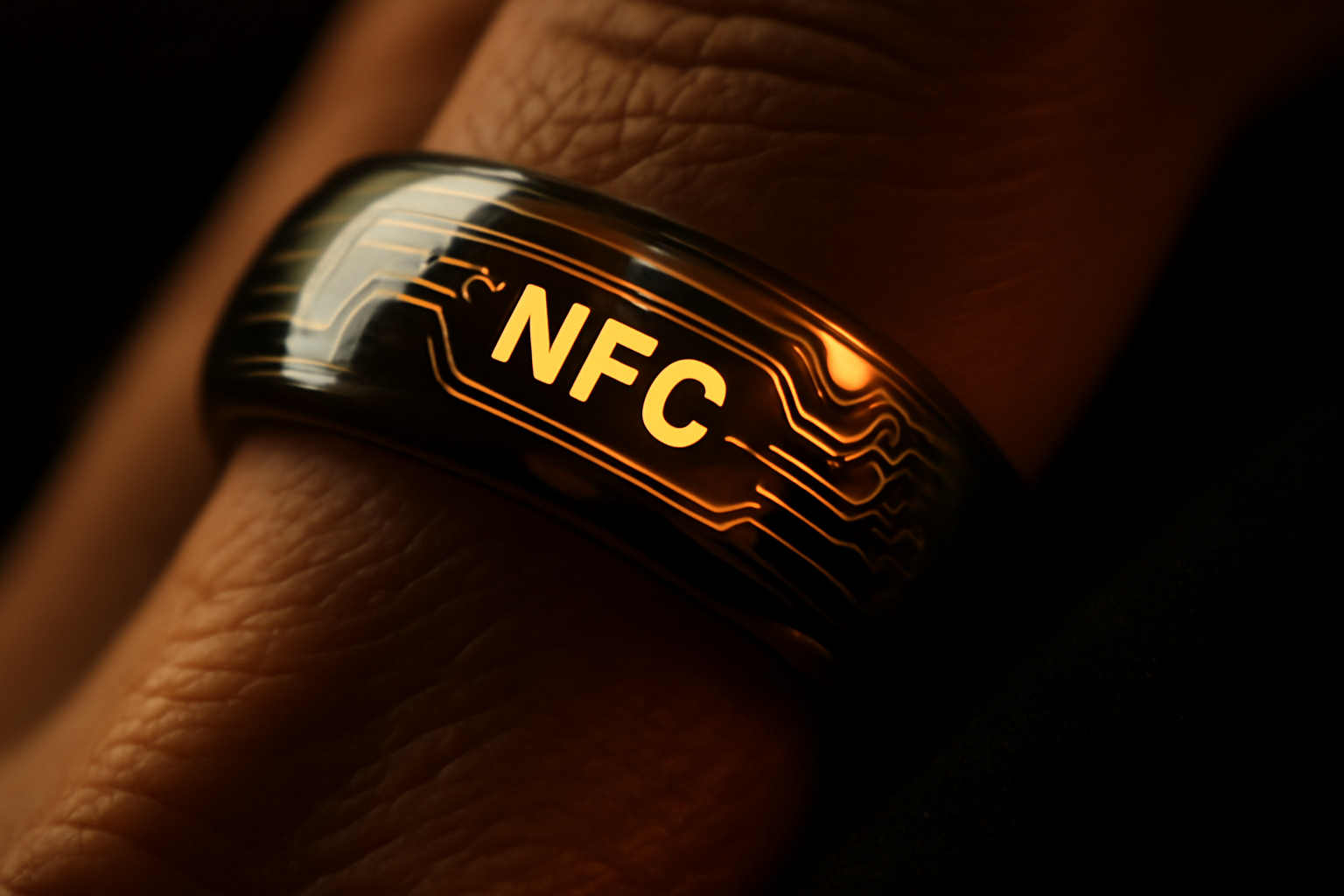
Inside your TapRing is a small chip and a coil antenna. The coil is looped around the inside of the ring. When you bring it close to a phone, the phone's NFC reader emits a low-frequency electromagnetic field. That field passes through the ring. The coil picks it up. The chip uses that energy to power on and transmit data back to the phone.
No battery. No charging. The phone powers the chip for the fraction of a second it needs to send your information.
That's it. That's the whole thing.
Why the Phone Doesn't Need an App
This is the part that surprises most people.
Modern iPhones and Android phones have NFC readers built in. They're always listening. When the phone detects an NFC chip nearby, it reads what the chip is broadcasting.
TapRing chips are programmed to broadcast a URL. A direct link to your digital profile.
When the phone reads that URL, it treats it like any other web link. The phone's operating system handles it automatically. It opens a browser. Your profile loads. Done.
The other person doesn't need to download anything. They don't need to have met you before. They don't need a signal from a cell tower, because the NFC transaction happens locally, between your ring and their phone.
The only thing that requires a connection is loading the actual profile page. And most venues with any foot traffic have Wi-Fi or cell service strong enough for that.
Why a Ring Works Better Than a Card
An NFC business card does the same technical thing. The chip, the coil, the URL, the tap. Same mechanism.
But a card lives in your pocket or your wallet. You have to find it. You have to hand it over. You have to hope you have one left. You have to hope it doesn't get bent or left on a table.
A ring lives on your hand. It is there when your hands are full. It is there when you've just walked in from outside and haven't settled yet. It is there when the conversation moves faster than you expected and someone asks how to find you.
The physics are identical. The difference is availability. Your hands are always with you.
Why It Works on Locked Phones
This one surprises people the most.
On most Android phones, NFC reading is active even when the screen is off. The phone is always scanning for chips nearby. When it finds one, it wakes the screen and shows the link.
On iPhones, NFC background reading has been available since the iPhone XS. It does not require Face ID or a passcode to read an NFC tag. The phone reads the chip and surfaces the link before the user has done anything.
This means the person you're talking to doesn't have to unlock their phone, open an app, navigate anywhere, or prepare. You tap, their phone responds.
What This Means for You
The technology removes every step that creates friction.
You are not asking someone to do something. You are giving their phone something to respond to. That is a completely different dynamic.
The chip in your TapRing is small enough to wear all day. It is passive, so it never runs out of power. It broadcasts a link that any modern phone can follow.
All of that happens in under a second.
The science is decades old. The application is just finally small enough to wear.