
The Phone Is Still Locked and It Already Worked
Most people assume NFC requires a phone to be open, active, and ready. It does not. On most modern smartphones, NFC scanning works at the lock screen. You tap, the link appears, the page opens. No unlocking required.
That sounds like a small detail. It is not.
The moment after a conversation is short. People are already mentally moving to the next thing. If sharing your contact required someone to unlock their phone, open a browser, type a URL, or download anything, most of them would not do it right there. They would mean to. They would not.
But a notification that appears on a locked screen? That gets tapped immediately.
Why This Is Built Into the Hardware
Apple enabled NFC background tag reading starting with iPhone XS. That means iPhones from 2018 onward can detect NFC tags without any app open, without any setup, without the user doing anything except holding their phone near the tag.
Android has had similar functionality for years. Most Android devices running a reasonably current OS handle NFC reads at the lock screen or with minimal interaction.
This was not designed specifically for networking rings. It was designed for transit cards, smart home tags, and product packaging. But it works exactly the same way when the NFC chip is inside a ring on your finger.
The infrastructure was already there. TapRing just put it somewhere useful.
What Actually Happens When You Tap
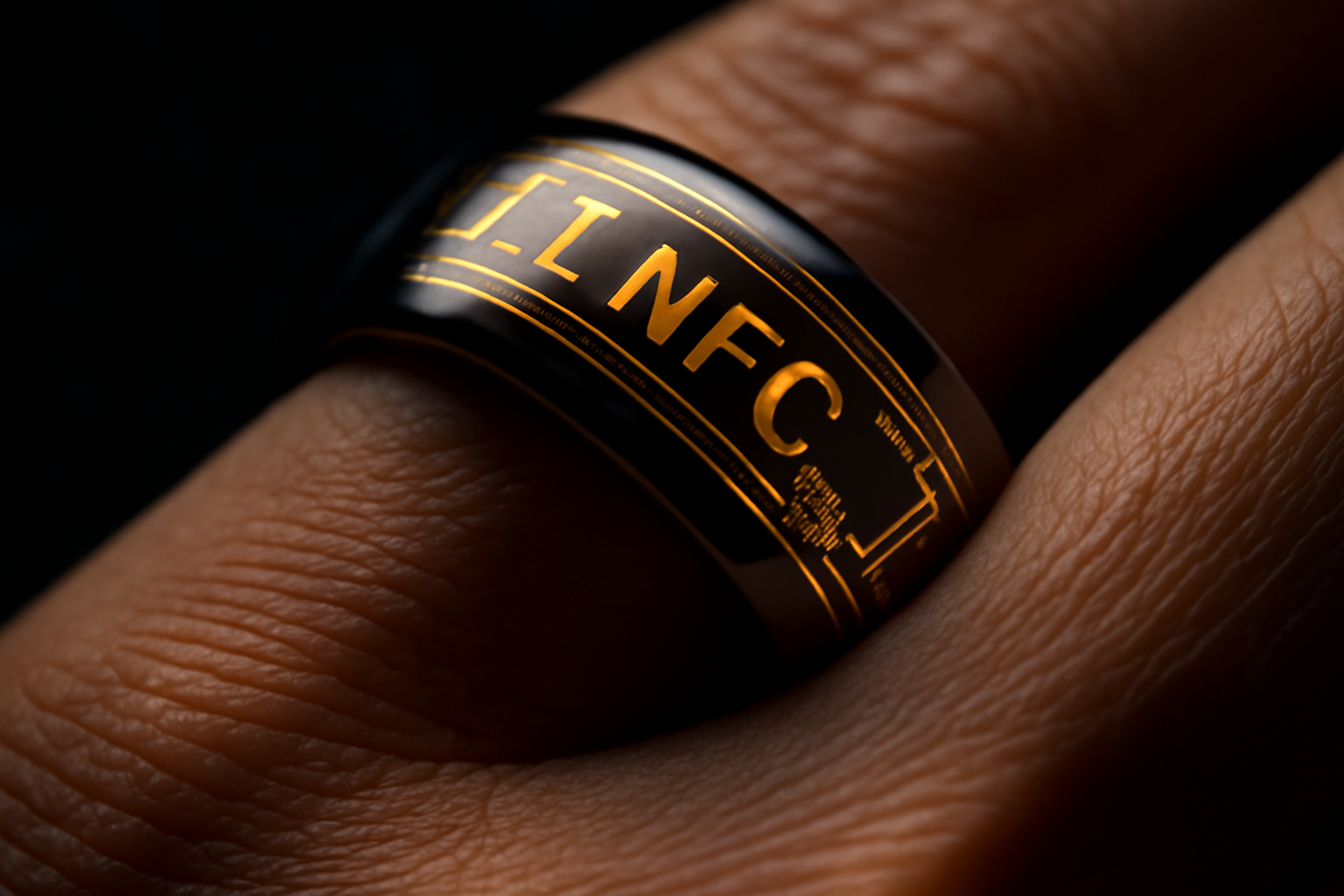
The ring contains a small NFC chip. No battery. No Bluetooth. No connection to anything until a phone comes near it.
When a phone gets close enough, the phone's NFC reader powers the chip through electromagnetic induction. The chip transmits a URL. The phone receives it and opens it automatically in the browser.
That URL leads to your TapRing profile. Name, title, contact info, links, whatever you have added. The other person can save your contact, follow a link, or just screenshot it. No app. No account. No friction.
The whole thing takes about one second.
Why the Lock Screen Part Matters in Real Life
Think about when networking actually happens. A conference hallway. A loud event. A quick conversation near an exit. Someone is already putting their coat on.
In those moments, nobody wants to fumble with their phone. They are holding a drink. Their hands are full. They are mid-sentence with someone else.
A locked phone can still receive your tap. The notification shows up. They see it. They tap it. Done.
If your contact method requires more than that, you are asking for effort that most people will not give in the moment. They will give it later. Later is where contacts go to be forgotten.
The Phones That Do Not Qualify
Very old phones without NFC hardware will not work. A phone running software from several years ago might behave differently. In practice, almost every smartphone someone hands you in a professional setting in 2024 will handle a TapRing tap without any issue.
You do not need to ask if their phone supports it. You do not need to explain anything. You just tap. If it works, great. If for some reason it does not, your profile URL is right there on your TapRing page and you can send it another way.
But in most rooms, it works. On most phones. Whether the phone is unlocked or not.
It Works Because the Phone Was Already Waiting
This is the part people do not realize until they see it happen. The phone is not passive. Modern smartphones are always scanning for NFC signals in the background. They are ready before you are.
TapRing costs $45 and up. The Pro plan is $5.99 a month or $2.99 a month on a yearly plan. One ring. No app required on the other phone. Works on locked screens.
The phone was already ready. The question was whether you were.