
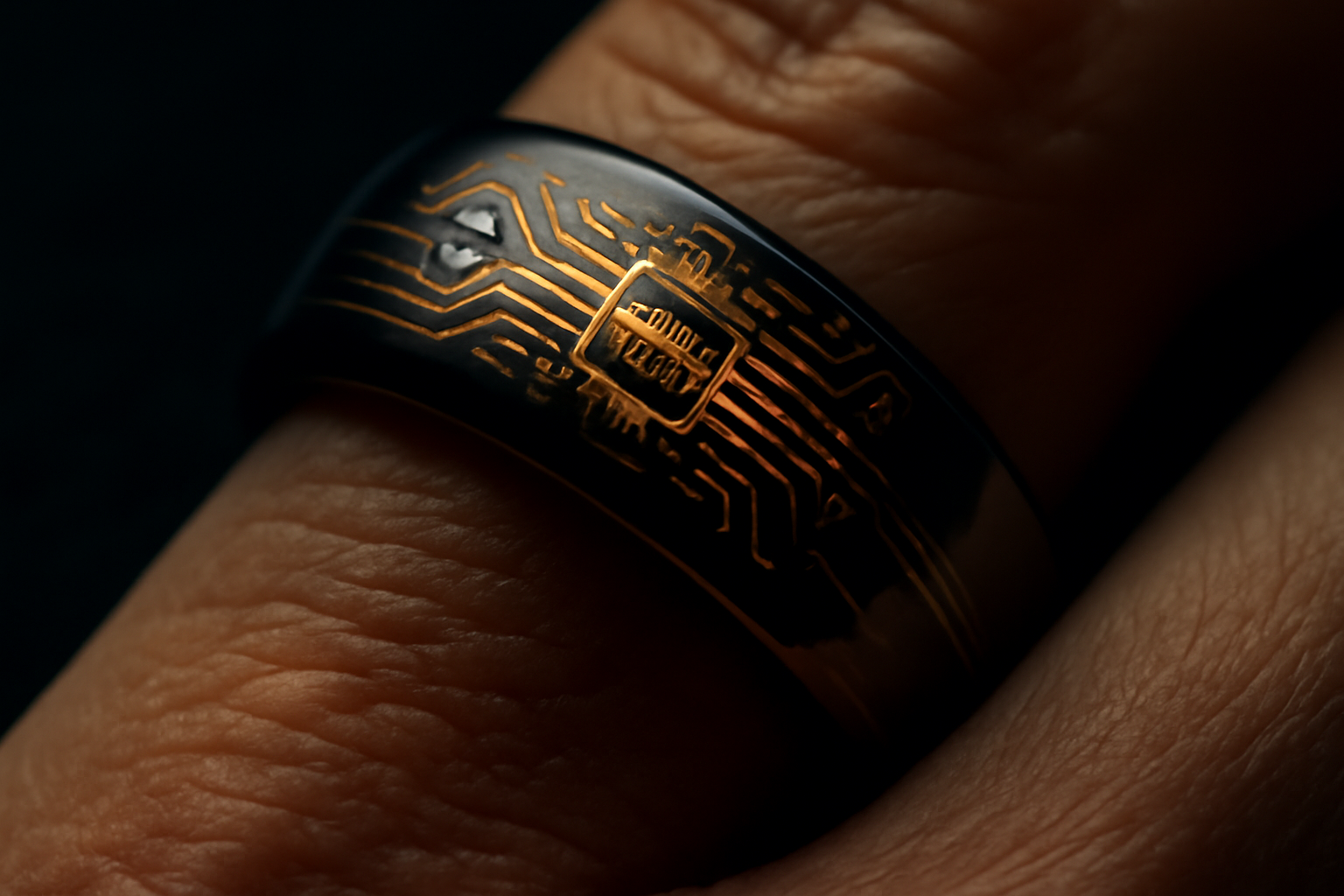
The Feature That Was Already There
Your phone can read a TapRing right now. No download. No setup. No special mode to enable.
It has been able to do this for years.
Android devices started shipping with NFC around 2011. iPhones got reliable background NFC reading with the iPhone XS in 2018. That means the overwhelming majority of smartphones in active use today can tap and read an NFC ring without doing anything at all.
Nobody really announced this. It just became true.
What NFC Actually Is
NFC stands for Near Field Communication. It is a short-range wireless standard, not an app, not a platform, not a subscription. It is baked into the hardware of the phone itself.
When you bring an NFC chip close to a compatible phone, the phone's antenna picks up a tiny electromagnetic signal from the chip. That signal carries a small piece of data. In the case of a TapRing, that data is a URL. The phone reads it and opens the link.
The whole thing happens in under a second.
No app needs to launch. No Bluetooth pairing. No WiFi handoff. The phone just reads the chip the same way a scanner reads a barcode, except the user does not have to open anything first.
Why People Still Think It Requires Something Extra
NFC got famous through contactless payments. Apple Pay. Google Pay. Tap-to-pay at checkout.
People associate NFC with payment apps, so they assume using it for anything else requires a similar setup. It does not.
Reading an NFC tag is completely passive. The phone does not need any app open. It does not need to be in a special mode. On most Android phones, NFC reading is always on in the background. On iPhones, it works automatically as long as the phone is unlocked or even just lit up.
The confusion comes from conflating two different things. Writing to an NFC chip or initiating a payment requires specific software. Reading a simple NFC tag requires nothing. It is closer to clicking a link than completing a transaction.
What This Means for a TapRing Specifically
When someone taps your TapRing, their phone is not running anything special. It reads the chip, gets the URL, and opens your digital profile in the default browser.
That profile shows whatever you have put on it. Name. Title. Contact links. Phone number. Portfolio. Social profiles. You control it. You can update it anytime. The ring itself never changes, but what the URL points to always reflects your current information.
The person on the other end does not need to have heard of TapRing. They do not need to understand NFC. They just see their phone open a page with your info. From their side, it looks like a very fast, very smooth way to share contact details.
Because that is exactly what it is.
The Part That Actually Surprises People
Most people, when they see a TapRing work for the first time, ask the same question. Do they need to download something?
No.
Do they need to have their WiFi on?
No.
Does it work on iPhones?
Yes.
The surprise is not that the technology is impressive. The surprise is that it is this ordinary. NFC reading is a standard feature. It has been quietly sitting in smartphones for years, mostly used for paying for coffee. TapRing just uses it for something you actually need every day.
You Have Been Ready for This Longer Than You Think
The technology is not new. The phones around you already support it. The only thing that changes when you get a TapRing is that you finally have a chip worth tapping.
Rings start at $45. The Pro plan is $5.99 a month or $2.99 a month on a yearly plan. Your profile lives at tap-ring.com and you can update it as often as you need.
The phones in every room you walk into are already ready. The only question is whether you are.