
The Part Nobody Thinks to Ask
Someone taps their phone to your ring. A contact card opens. They save it. Done.
Most people stop there. They don't ask what just happened. They don't ask why it worked. They just assume it's some kind of magic and move on.
But if you've ever been curious about what's actually going on inside that ring, this is for you.
There Is a Tiny Chip in There
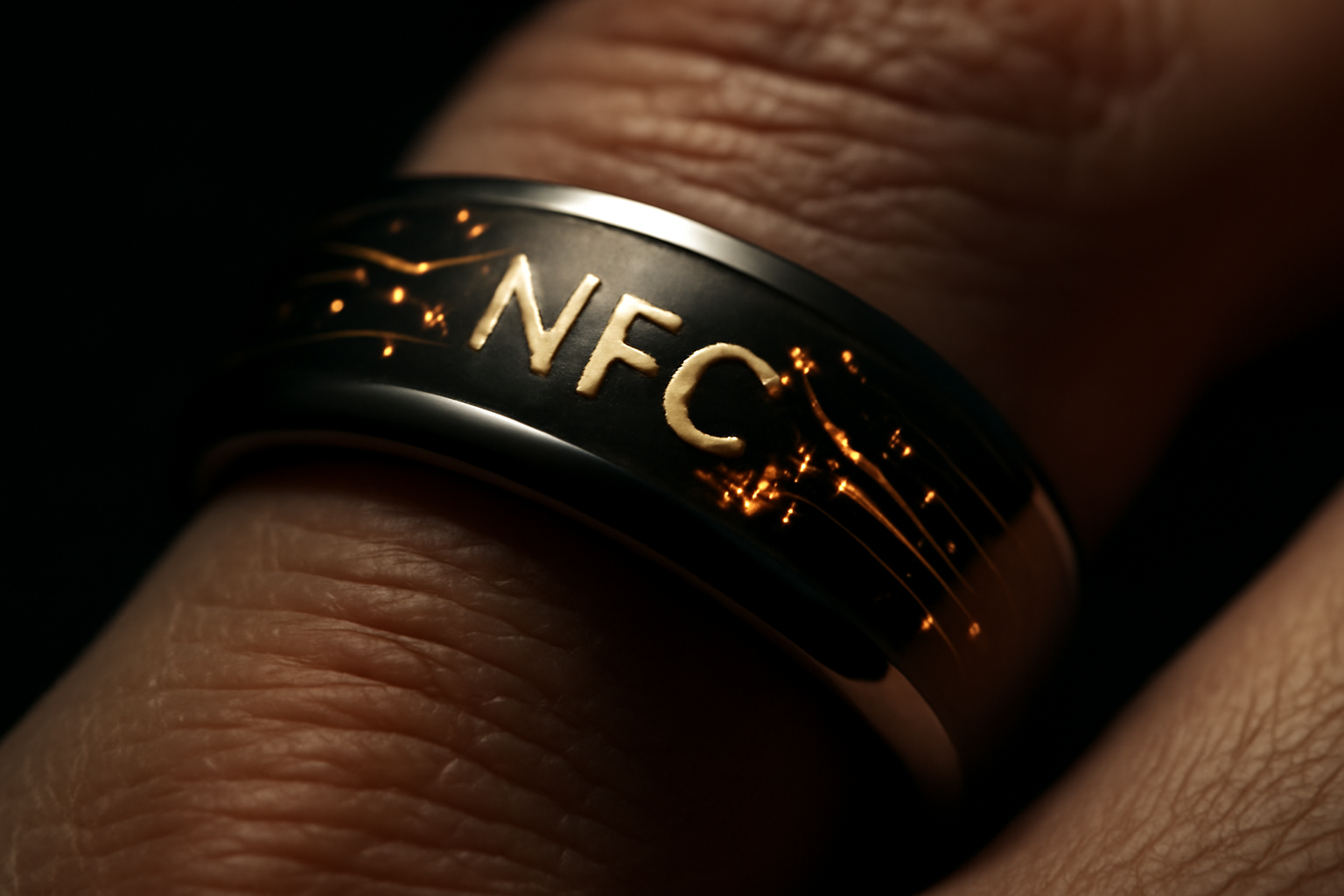
Inside every TapRing is a small NFC chip. NFC stands for Near Field Communication. The chip itself has no battery. It has no moving parts. It just sits there, waiting.
The chip stores a URL. That's it. One link.
When a phone with NFC capability gets close enough, it generates a tiny electromagnetic field. That field powers the chip just long enough to transmit the URL. The phone reads it and opens a browser. The browser loads your TapRing profile page.
The whole thing takes about half a second.
Why It Doesn't Need a Battery
This is the part that surprises people. The ring has no power source. No charging required. No battery that dies in the middle of a conversation.
The energy to read the chip comes entirely from the phone. The phone is doing all the work. The ring just holds the information and responds when asked.
This is the same principle used in contactless credit cards and transit passes. You've been using this technology for years without thinking about it. Your bank card in your wallet works the same way.
Why No App Is Needed
Because the chip just sends a URL, the phone handles everything through its default browser. There's nothing to install on the other person's phone. No pairing process. No permissions to grant.
The phone reads the chip the same way it reads any NFC tag. Then it opens a webpage. That's the entire workflow.
This is different from Bluetooth, which requires both devices to actively negotiate a connection. NFC is passive on one side. The ring never initiates anything. It only responds.
What's Actually on Your Profile
The URL the chip stores points to your TapRing profile page. That page can hold your name, title, phone number, email, links, social profiles, and whatever else you want to include.
When someone taps you, they land on that page. They can tap to call, tap to email, or tap to save your contact directly to their phone.
Because the link points to a live web page, you can update what's on it anytime. Change jobs. Change your number. Add a new link. The chip doesn't need to be reprogrammed. The page updates. Everyone who taps you from that point forward sees the new version.
How Durable the Chip Is
This is the other common question. If there's a chip in there, can it break?
The chip is embedded in the ring material during manufacturing. It's not exposed. It has no fragile components. There's no screen, no battery, no connector port.
TapRings are designed for daily wear. The chip itself has a lifespan measured in tens of thousands of taps. For everyday use, that's effectively unlimited. You will not wear out the chip by networking too much.
The Simple Version
Tiny chip. No battery. Phone powers it on contact. Chip sends a URL. Phone opens a webpage. Your info is right there.
That's it. Nothing complicated. Nothing fragile. Nothing to charge.
The reason TapRing works so reliably is because it does almost nothing on its own. It's a stored link that wakes up when a phone gets close. Everything else is handled by technology already built into the device in the other person's pocket.
You just wear it. It handles the rest.