
Three Letters Nobody Explains
NFC. You've seen it on your phone settings. Maybe on a product box. Possibly on a ring you're thinking about buying.
Most people skip right past it. That's a mistake.
Because once you understand what NFC actually is, the whole idea of tapping a ring to share your contact info stops feeling like a magic trick and starts feeling obvious.
What It Stands For
NFC stands for Near Field Communication.
Break that down. "Near field" means close range. We're talking a few centimeters. "Communication" means two devices exchanging data.
So NFC is just two devices talking to each other when they get close enough. That's it. No apps. No Bluetooth pairing. No WiFi required. Just proximity.
How It Actually Works
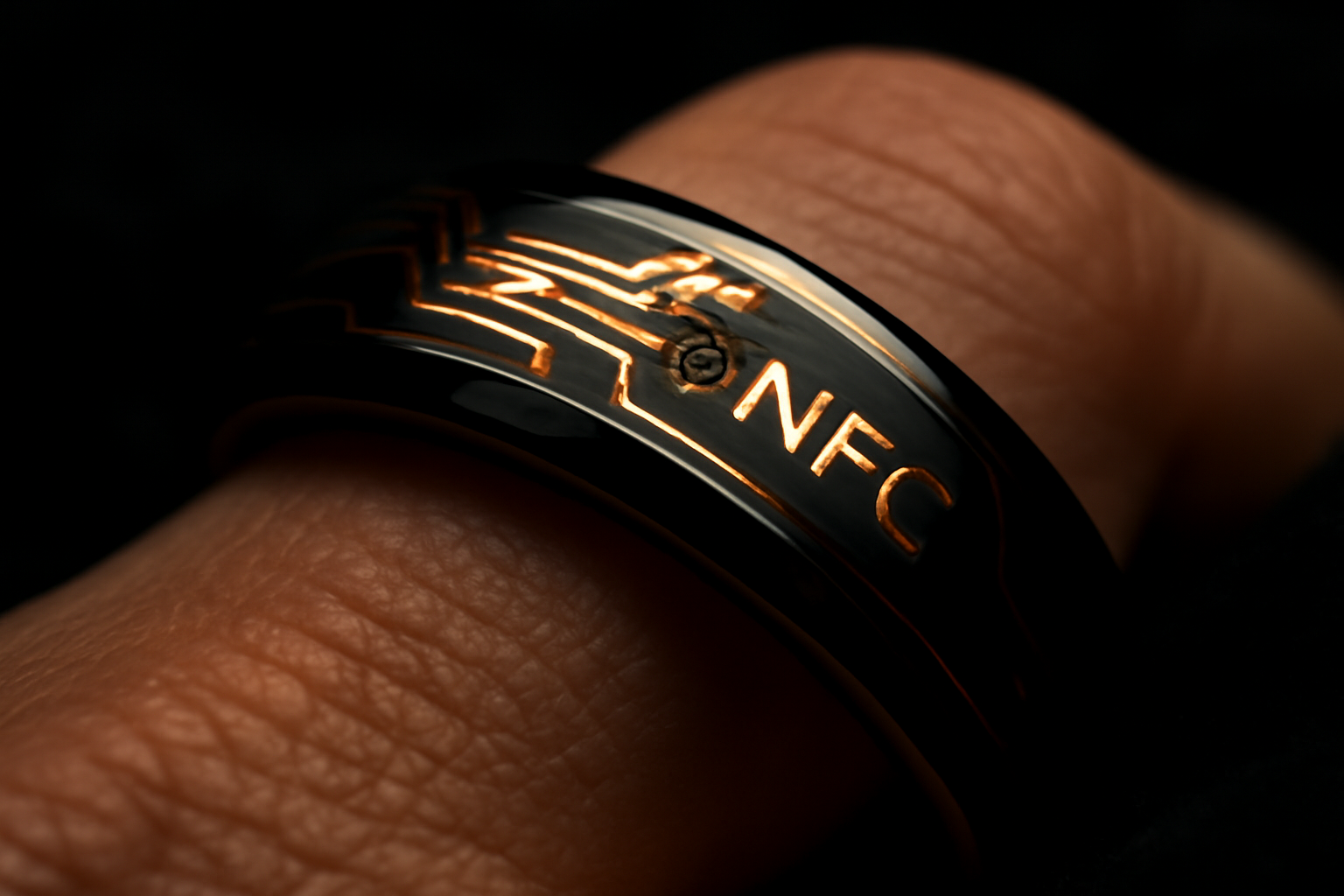
Inside your TapRing is a small chip and a tiny antenna coiled around the ring. The chip stores a link. The antenna broadcasts a signal.
When someone holds their phone near the ring, the phone picks up that signal and reads the chip. The chip sends the link. The phone opens it.
The whole thing takes about a second.
Here's the part people find surprising: the ring doesn't need a battery. The phone provides enough energy through the electromagnetic field to power the chip for the instant it needs to work. That's why your TapRing never needs charging.
You Already Use NFC More Than You Think
Apple Pay. Google Pay. Contactless credit cards. Hotel key cards. Transit passes. Passports with that little chip symbol on the cover.
All NFC.
The technology has been in smartphones since around 2011. It's been baked into iPhones since the 6. Android has had it even longer. By now, nearly every phone in someone's pocket can read an NFC chip without downloading anything.
That last part matters. When you tap your TapRing against someone's phone, they don't need an app. They don't need to have heard of NFC. They just need a phone that was made in the last decade. Which is almost everyone.
Why This Makes TapRing Different From a QR Code
QR codes also work without an app on most phones now. Fair point.
But QR codes require someone to open their camera, aim it, hold it steady, and wait for the code to register. In a fast conversation at a noisy event, that's a lot of steps.
NFC is tap and done. No aiming. No launching an app. No holding still. One motion and your contact info is on their screen.
It also looks completely different. A QR code says "scan this." A ring says nothing until you decide to use it. That element of surprise is part of what makes people remember you.
The Range Is a Feature, Not a Bug
NFC only works up to about four centimeters. Some people hear that and think it sounds like a limitation.
It's not. It's intentional.
Because NFC requires physical closeness, it can't be triggered accidentally across a room. Nobody's reading your ring from ten feet away. The tap has to be deliberate. That means you're always in control of when and who you share with.
Compare that to leaving a stack of paper cards on a table for anyone to grab. With TapRing, every share is a choice you make.
Now You Know
NFC is not a buzzword. It's a real piece of infrastructure that's already in the phone in your pocket, the card in your wallet, and the watch on your wrist.
TapRing just put it on your finger.
And once you understand how it works, you realize the question isn't whether this technology is ready. It's been ready for years. The question is whether you're using it or still handing out paper.
Rings start at $45. Your profile updates in real time. The person across from you doesn't need to do anything except hold their phone close.
That's near field communication. Now you know what it means.