
The Battery Warning Nobody Plans For
Your phone drops to 8 percent around hour three of the event. You know the feeling. You start rationing. You stop taking photos. You put it on low power mode and hope it holds.
Then someone walks up and wants to connect.
You have maybe one move before that phone goes dark. And if that move involves pulling up a QR code, a contact sharing app, or your LinkedIn profile, you are already losing.
What You Actually Lose When the Screen Goes Black
It is not just inconvenient. It is a full stop.
Every digital tool that lives on your phone requires your phone to be on. QR codes need a screen to display from. Contact apps need a screen to open. Even saved screenshots of your info need brightness and battery to exist.
When the phone dies, all of it goes with it.
The person standing in front of you is still there. The opportunity is still live. But your ability to act on it just powered down.
The Workaround People Try
Some people borrow a charger. Some find an outlet and stand near a wall for twenty minutes hoping the conversation stays warm. Some try to write their number on a receipt or a napkin and immediately regret it.
Some just say "find me on LinkedIn" and walk away knowing that follow-up is unlikely.
None of these are good. They all introduce friction. And friction is where connections go to die.
Why the Ring Changes the Equation Entirely
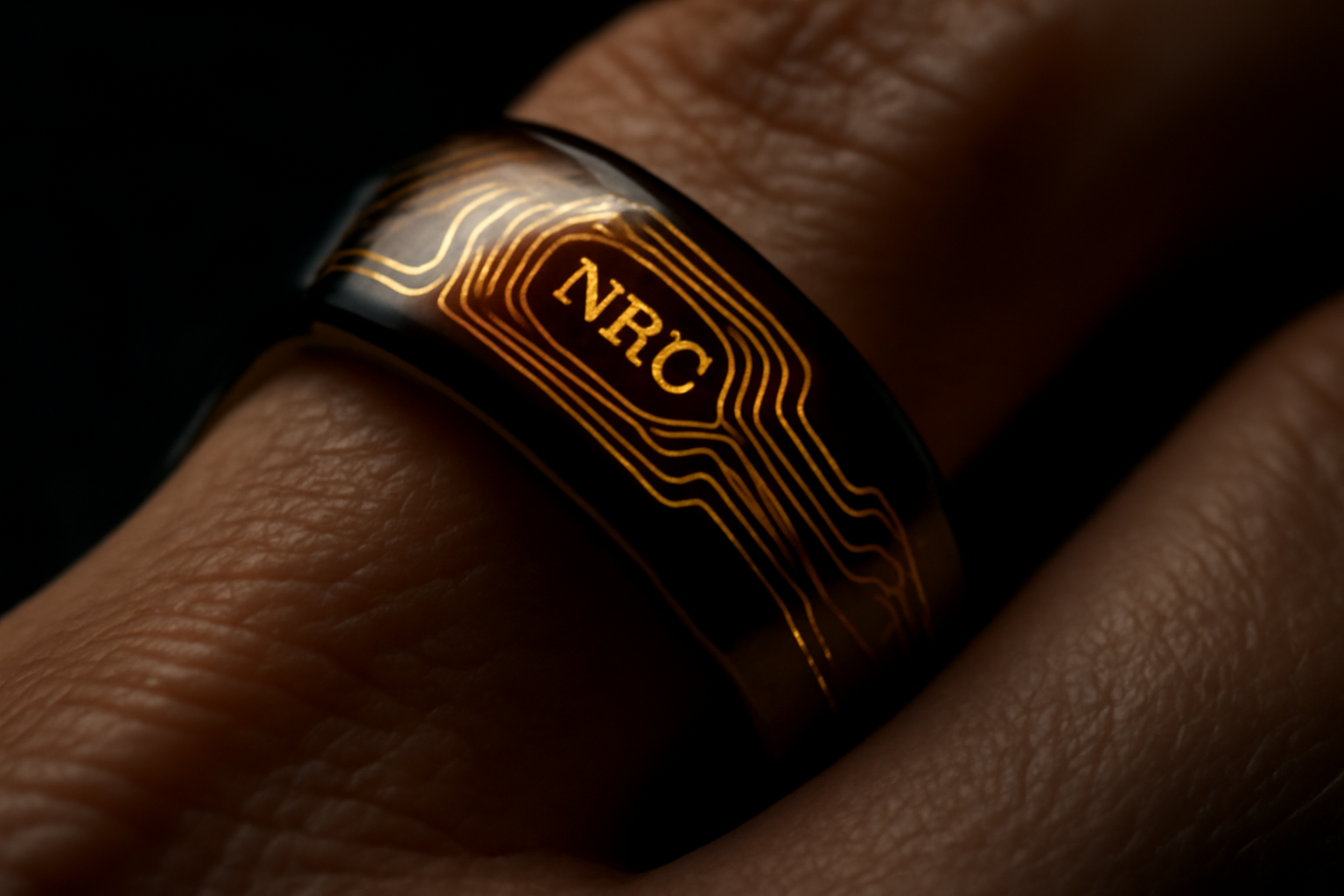
A TapRing does not run on your battery. It does not need your phone to be on. It does not need your phone to be in your hand, your pocket, or even the same room.
The ring works because it is powered by the phone of the person tapping it. Their phone sends a tiny pulse of energy to the chip in your ring. That chip responds with your contact page. The whole thing takes less than a second.
Your phone being dead is completely irrelevant.
You could hand your dead phone to a coat check attendant, walk back into the room, and still share your full contact info with every person you meet for the rest of the night. Nothing changes. Nothing breaks.
What That Looks Like in Practice
You are at an industry mixer. It is late. Your phone has been dead for two hours. You are still in the room because the conversations are good.
Someone you have been trying to meet all night finally introduces themselves. You tap your ring to their phone. Your contact page opens. They save your number, your email, your LinkedIn, your website. All of it.
They do not know your phone is dead. It does not come up. It does not matter.
You follow up the next morning from a fully charged device and the connection is already there waiting.
The Broader Point
Most networking tools are extensions of your phone. When your phone has a problem, the tool has a problem. Low battery, cracked screen, no signal, storage full. Any of it can take the whole system down at the exact wrong moment.
A ring is not an extension of your phone. It is a separate object that works independently. The only technology it needs is already in the pocket of whoever you are meeting.
That is a different category of reliable.
What It Costs to Be Phone-Dependent
Probably nothing, most of the time. Your phone is usually charged. The situation usually works out.
But the times it does not work out tend to be the times it matters most. Big events run long. Important conversations happen late. The person you most needed to meet shows up in the last thirty minutes.
Being ready when your phone is not is not a small thing.
TapRing starts at $45. It works when nothing else does. tap-ring.com