
Objects Communicate
Before you say a word, people are reading you. The bag you carry. The shoes you wore. Whether you showed up on time. Whether you checked your phone mid-conversation.
None of this is fair. All of it is real.
The tools you use are part of that reading. Especially the ones you use in front of people. When you reach for something to share your contact, that moment gets noticed.
The Card Reach
Watching someone dig through their bag for a business card is a small thing. But small things add up.
They find the card. It has a crease in it. Or it has a coffee ring on the back. Or the title on it doesn't quite match what they just told you they do now. Or they hand it over and say "I should really get new ones made."
Nobody walks away thinking that person is unprepared. But they also don't walk away thinking that person has every detail handled. The impression is neutral at best.
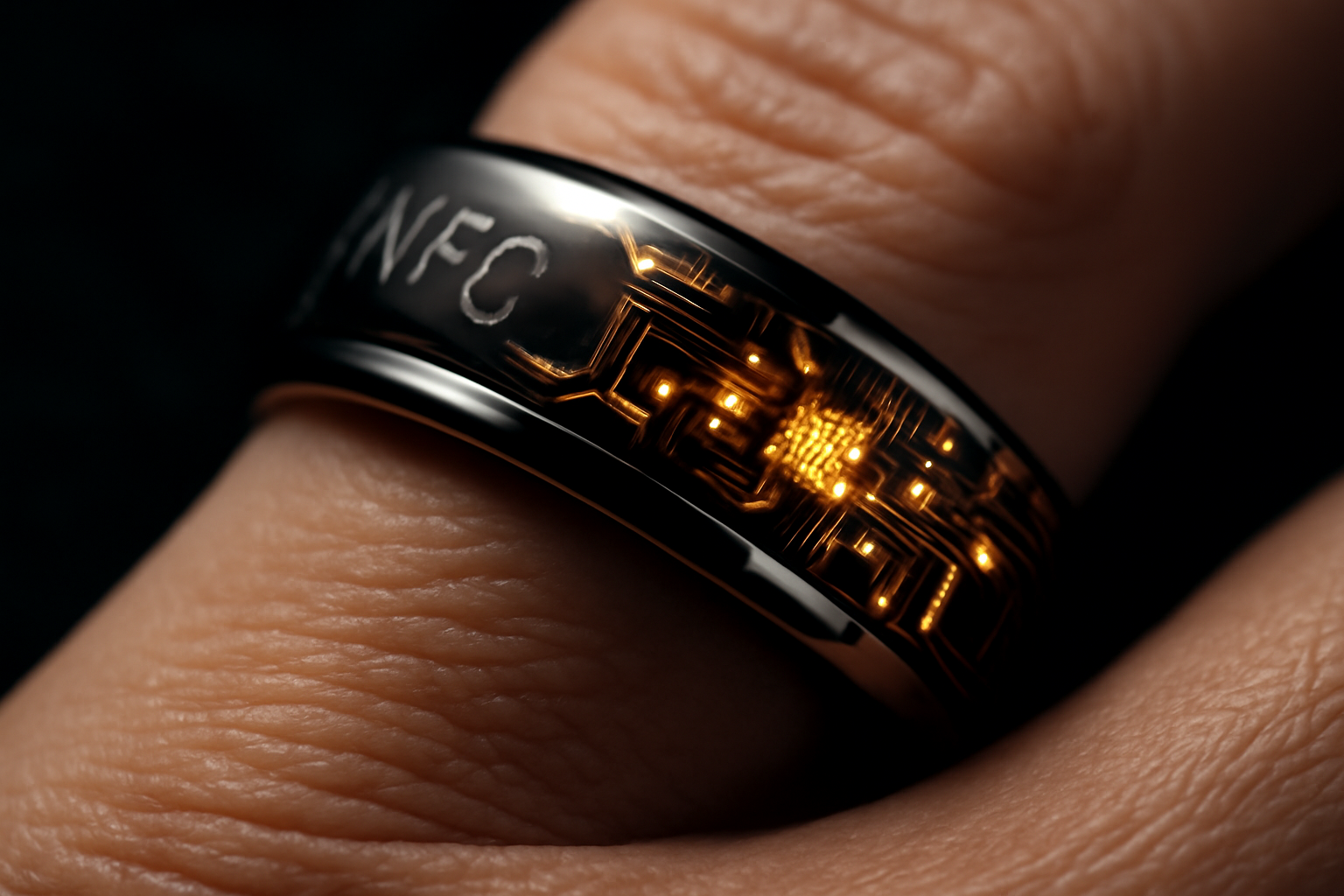
Contrast that with someone who just taps their ring to your phone and your phone opens their contact page. Clean. Instant. Nothing to dig for, nothing to apologize for.
The tool communicated something before the conversation continued.
What Intentional Tools Signal
Using something intentional signals that you thought about it. That you made a decision. That you care enough about how you come across to choose tools that match that standard.
This doesn't have to be expensive. TapRing starts at $45. The Pro plan is under $6 a month, or less than $3 a month if you go yearly. That's not a luxury purchase. It's a decision about how you want to operate.
And people feel decisions. They don't always name them. But they feel the difference between someone who threw things together and someone who thought it through.
The Curiosity It Creates
The ring invites questions. Not intrusive ones. Just natural ones.
"What is that?"
"How does that work?"
"Does the other person need an app?"
Those questions are entry points. They give you a chance to explain something interesting about yourself without it feeling like a pitch. You're not selling anything. You're just answering a question about a ring on your finger.
And the fact that it works without an app on the other phone tends to surprise people. That surprise is a moment. A small one, but genuine. Genuine moments are how people remember you.
The Consistency Argument
Most professionals are inconsistent with their tools. They've got a polished resume and a messy digital card. They've got a great website and a LinkedIn profile they haven't touched in two years. They've got a strong personal brand in some places and total neglect in others.
TapRing doesn't fix all of that. But it closes one gap. It makes the moment you hand someone your contact as intentional as anything else you do.
You update your profile from your phone, any time, anywhere. Your ring always points to the current version. So the person who taps it at an event three months from now gets the same clean, accurate, up-to-date contact as the person who tapped it yesterday.
That's consistency. It doesn't happen by accident.
The Signal Is the Point
Networking is not just about exchanging information. It's about making an impression strong enough that the information gets used.
The tools you carry are part of that impression. Not the biggest part. But not a negligible one either.
When the way you share your contact matches the level of care you bring to everything else, people notice. They might not say it out loud. But it lands.
The ring is on your finger. It's always with you. It never runs out. It never has a typo. It never says "let me find my card."
It just says: this is how I operate.