
You Left the Table. The Conversation Didn't.
You had a good run. Thirty minutes at a table with four people you didn't know before tonight. Real talk. Good energy. The kind of thing you came hoping for.
Then you moved on. Got a drink. Said hello to someone else.
And the people at that table kept going. The topic shifted. Someone brought up a problem. Someone else knew exactly the right person for it.
That person was you. But you were across the room.
The Referral That Happened Without You
This is not hypothetical. This is how most referrals die.
Two people keep talking after you leave. One of them mentions a need. The other thinks of you for a half second. Then realizes they don't have your contact. Then thinks of someone else they do have.
You lost the referral before it was ever yours. Not because you weren't qualified. Because you weren't reachable in that moment.
The person who got it wasn't necessarily better. They were just already saved in someone's phone.
What Lingering Looks Like When You Can't Stay
You cannot physically be at every table. You cannot follow every conversation after you leave it.
But you can leave something behind that speaks for you.
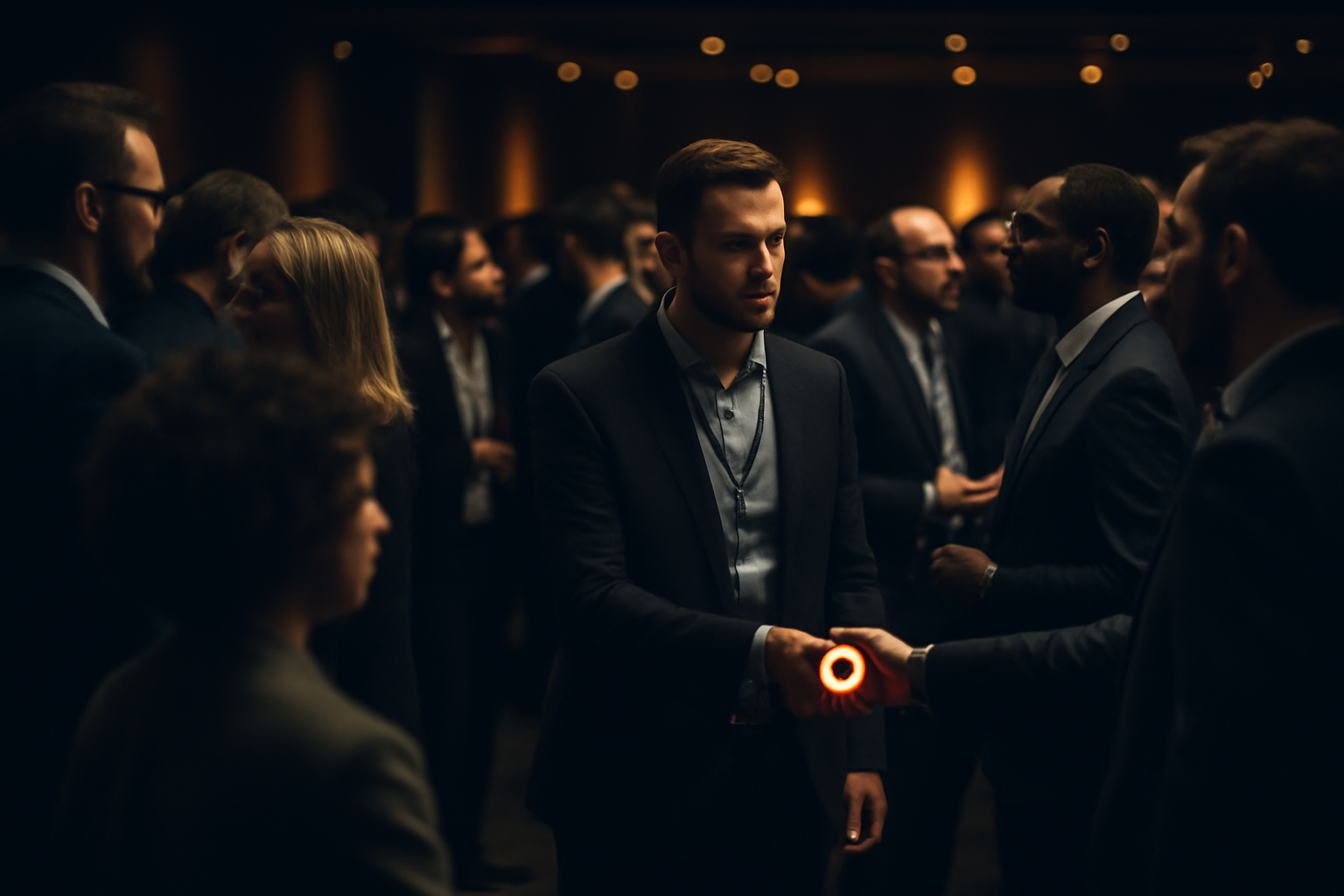
When someone taps your TapRing before you move on, you're still in the room. You're in their contacts. You're searchable. You're referable.
The conversation can keep going and you're still part of it, even from the other side of the venue.
The Moment Before You Walk Away
Most people think of contact sharing as something that happens when a conversation is winding down. The awkward card exchange as a closing ritual.
Flip that.
Share your contact early. While the energy is still up. While they're interested enough to actually save it.
A quick tap, your full profile lands on their phone, and then you keep talking. Or you walk away. Either way, they have you.
That changes the geometry of every event. You're not racing to close the exchange before someone moves on. You're connecting and then continuing.
Why People Don't Follow Up When They Meant To
Intention is not the problem. Most people leave an event with three or four people they genuinely meant to reach out to.
Then life resumes. Monday shows up. The card is somewhere in a jacket. The LinkedIn search turns up four people with the same name.
The follow-up gets pushed. Then forgotten. Then it's too late and it feels weird.
This is not a character flaw. It's friction. And friction compounds.
The contacts that actually get followed up on are the ones that were easy from the start. Saved to the phone correctly. Photo there. Title right. One tap to message them.
Everything else was going to take effort someone didn't have.
You Can't Control the Conversation After You Leave
But you can control whether they can find you.
That's actually the whole thing. Not the pitch. Not the follow-up email template. Not the LinkedIn connection request you send three days later.
Just: did they save your contact in a way that actually works?
A paper card might make it. A number typed into a phone might survive. A tap that puts your full, current profile into their contacts definitely does.
Leave Something Behind
The table kept talking after you left. That's fine. That's how good events work.
Make sure when your name comes up, someone can pull up your contact in two seconds and pass it along.
That's the difference between being in the room and being in the outcome.