
Two Technologies, Same Goal
NFC and QR codes both let you share a URL without someone typing it. That's where the similarity mostly ends.
The difference comes down to how they work, how they feel to use, and what each one says about you.
How QR Codes Work
A QR code is a visual pattern. To use it, the other person opens their camera, points it at the code, holds it steady until it focuses, waits for the recognition, then taps the link that appears.
This works. It's not complicated. But it has a few issues. The person has to open their camera first, which means picking up their phone, unlocking it, finding the camera. In a fast conversation at an event, that's four or five seconds of fumbling. And you're both standing there watching someone's camera app try to find the right focal distance.
QR codes also need good lighting and a clean print. A worn card, a screen glare, a low-light room: all of these make the scan slower or fail.
How NFC Works
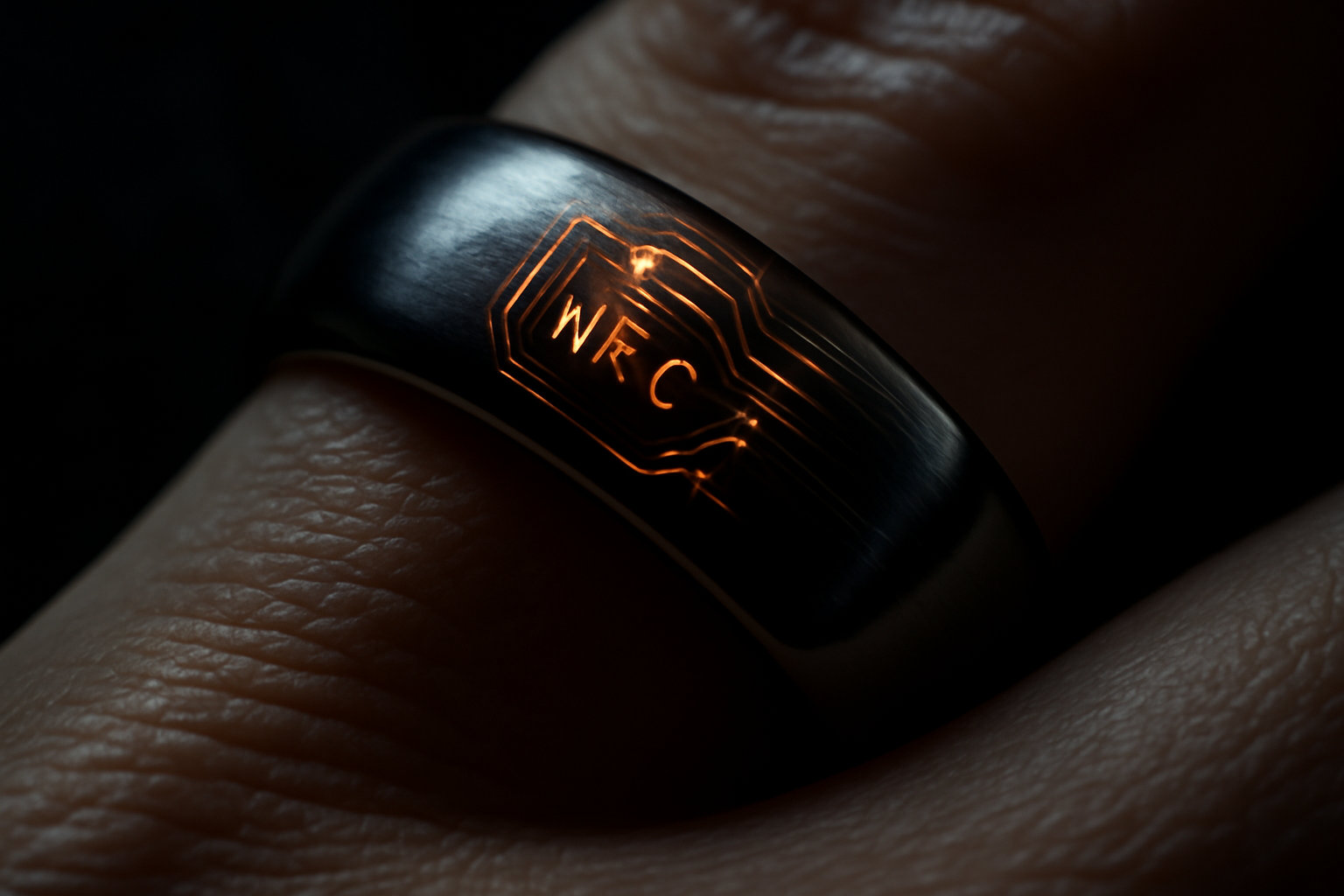
NFC is physical. You bring your ring near their phone. The phone detects it. A notification appears. They tap it. The profile opens.
No camera. No focusing. No visual hunting. It works in the dark. It works if your hands are in motion. It works in one smooth gesture that takes about the same time as a handshake.
The experience feels completely different. It doesn't feel like a tech demo. It feels like handing someone a card, except their phone already has your contact.
The Perception Gap
There's also a status element to this. Pulling out a QR code reads as "I saw a tutorial about this." Tapping a ring reads as "I invested in this, and I do it regularly."
First impressions involve peripheral signals. What someone is wearing, how confident they seem, what tools they use. A ring that shares your contact info with a tap signals that you think about the experience you create for other people.
When QR Codes Still Make Sense
QR codes are better for mass situations: a sign at a conference booth, a slide in a presentation, a poster. Places where physical proximity to another NFC device isn't practical.
For one-on-one contact exchanges, NFC is faster, cleaner, and more memorable. That's where TapRing lives.