
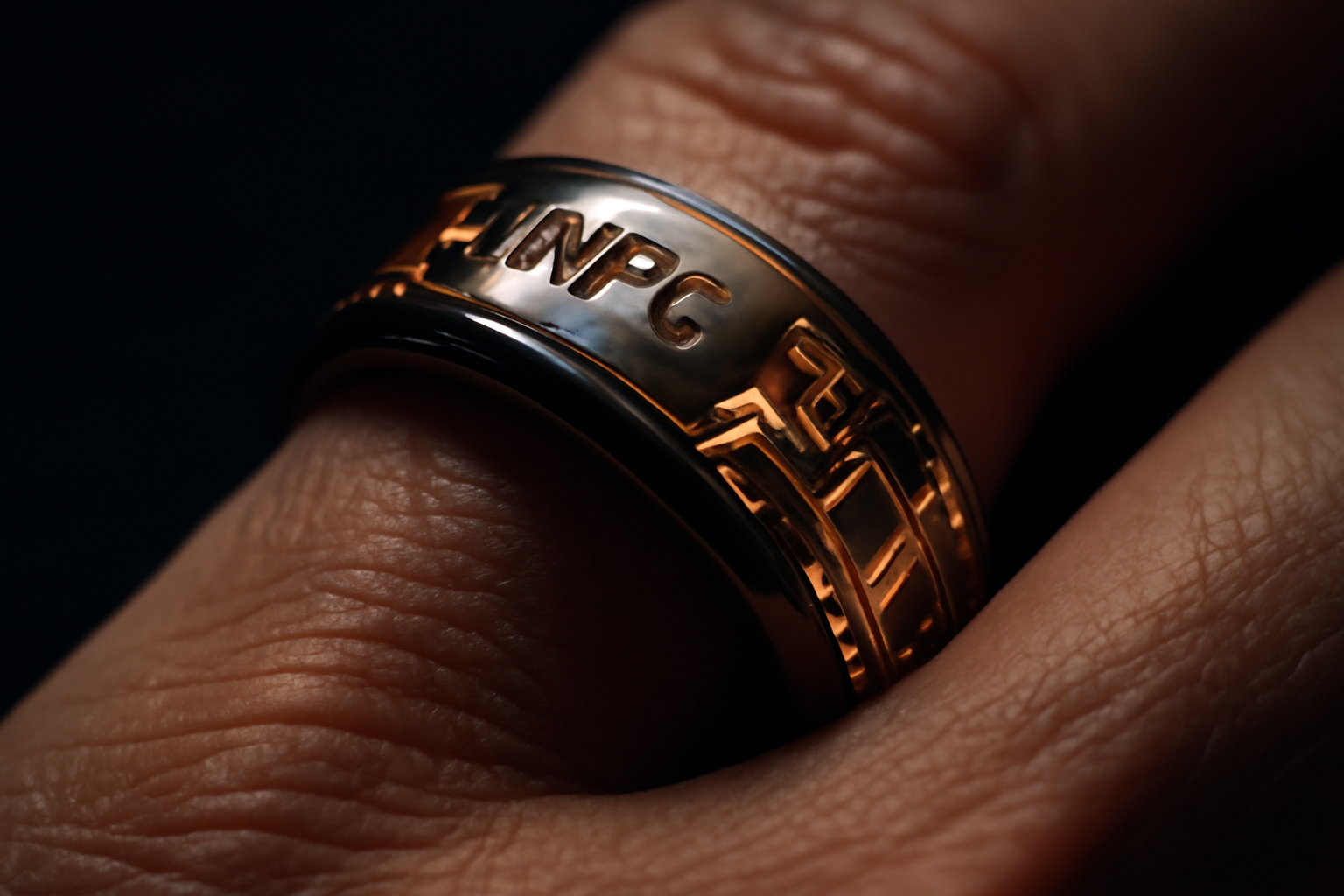
A practical question that rarely gets answered
You're about to wear this ring every day. To events, to work, to coffee shops, to awkward networking breakfasts you're only attending because you told yourself you would.
At some point, you wonder: does the chip die? Does it wear out? Is there a tap limit?
These are real questions. Here are real answers.
The chip has no battery
This matters for the wear question.
Most things that wear out do so because they have moving parts or they draw power from a battery that degrades over time. NFC chips in rings have neither.
The chip is passive. It sits there. When a phone gets close enough, the phone's electromagnetic field powers the chip just long enough to transmit the URL. Then it goes dormant again.
Nothing moves. Nothing drains.
The tap limit is not a practical concern
NFC chips are rated for a very high number of read operations. We're talking hundreds of thousands to millions of reads depending on the chip spec.
If you tapped your ring fifty times a day, every single day, you still wouldn't reach that limit in your lifetime.
For normal use, the chip itself is not going to fail from overuse.
What could actually cause a problem
The chip is embedded in the ring. The ring takes physical wear.
If the ring gets cracked, crushed, or heavily damaged, the chip could be affected. It's a thin piece of hardware. Extreme physical force, like smashing it against something hard, could theoretically break it.
But normal wear from daily use? Washing your hands, typing, opening doors, carrying things? The chip handles all of that without issue. It's built to live on a finger.
The ring material matters more than the chip
TapRing rings are made to be worn. The question of durability is really more about the ring construction than the chip inside it.
The chip is sealed within the ring. It's not exposed. It doesn't need to be cleaned or maintained. You just wear it.
What happens if the ring itself breaks
If the physical ring cracks or gets lost, your profile doesn't go with it. Your TapRing profile lives in the cloud, not in the ring.
You'd need a new ring, but all your information, your links, your contact info, your bio, everything you built is still there. You'd reprogram a new ring to point to the same profile and pick up right where you left off.
So what's the actual lifespan
For the chip: indefinitely, under normal use.
For the ring: depends on how you treat it and what material you chose. Harder materials hold up better. Tungsten, silicone, stainless steel. Check the product specs if durability is a priority for you.
The bottom line
You're not going to tap your way to a dead chip. That's not how this technology works.
Wear the ring. Use it. Tap people as many times as the situation calls for. The ring will hold up long past the point where you've stopped counting.