
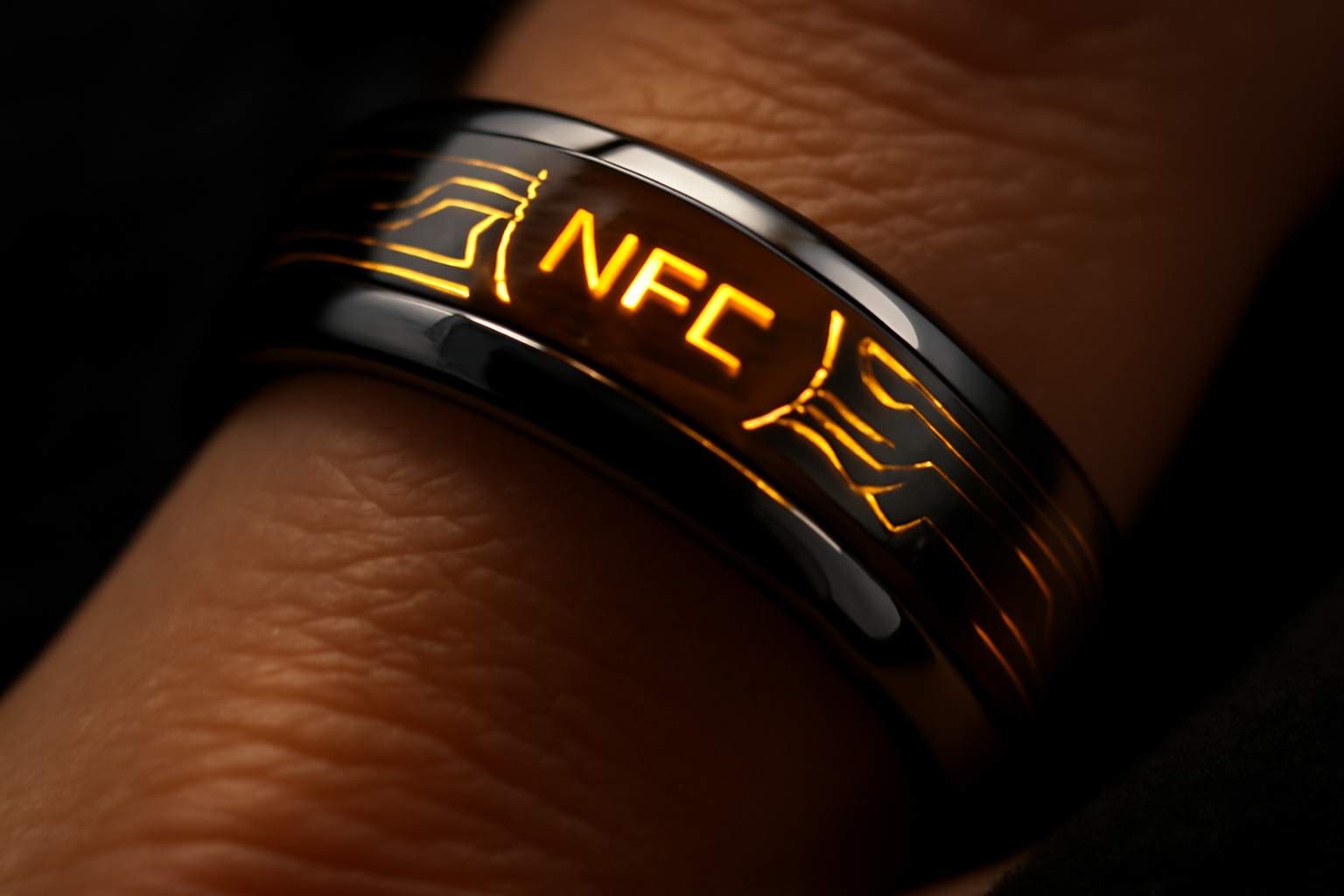
The Spec vs. Reality
The NFC standard specifies a maximum range of about 20 centimeters. In practice, reliable reads happen at around 4 centimeters or less, which is roughly an inch and a half.
For most devices and NFC tags, you want physical contact or very close proximity. Not across a table. Not across a room. You have to actually bring the ring to the phone.
Why the Range Is Short
NFC works through magnetic field induction. The reader (your phone) creates an electromagnetic field. The tag (your ring) picks up that field, harvests enough energy to power its chip, and transmits back.
The strength of that field drops off rapidly with distance. By the time you're more than a few centimeters away, there's not enough energy to power the chip reliably. That's why NFC is a contact technology more than a wireless one.
This is a feature, not a limitation. It means reads are intentional. You have to mean to do it.
How This Affects Using the Ring
When you tap your ring, aim for the NFC reader location on the phone. On iPhones, that's near the top edge. On most Android phones, it's in the center of the back.
Hold the ring there for about a second. Don't swipe quickly. Give the phone time to detect the chip and complete the read. If it doesn't trigger, try adjusting position by a centimeter and hold again.
Once you've done it a few times, it becomes muscle memory. Like using a key card to open a door.
Does Ring Material Affect Range
The NFC chip is embedded in the ring body and the material around it can slightly affect read distance. Metal rings generally perform better with the chip designed correctly. Ceramic, resin, and silicone rings all work fine at close range.
Water doesn't interfere with NFC. So if your hands are wet, the ring still works.
Gloves and Cases
A thin phone case doesn't affect NFC reads much. Thick rubber cases or metal cases can dampen the signal. If someone has a wallet case on their phone, the cards inside can sometimes interfere. Have them flip the phone to the back without the wallet side.
Gloves are addressed separately. The short version: thin gloves are usually fine. Thick ones reduce the reliable range further.